



College sports as fans have known them have changed dramatically over the past several years. Players can now earn money from their name, image and likeness, schools are sharing revenue with athletes, and the transfer portal has made changing teams easier than ever.
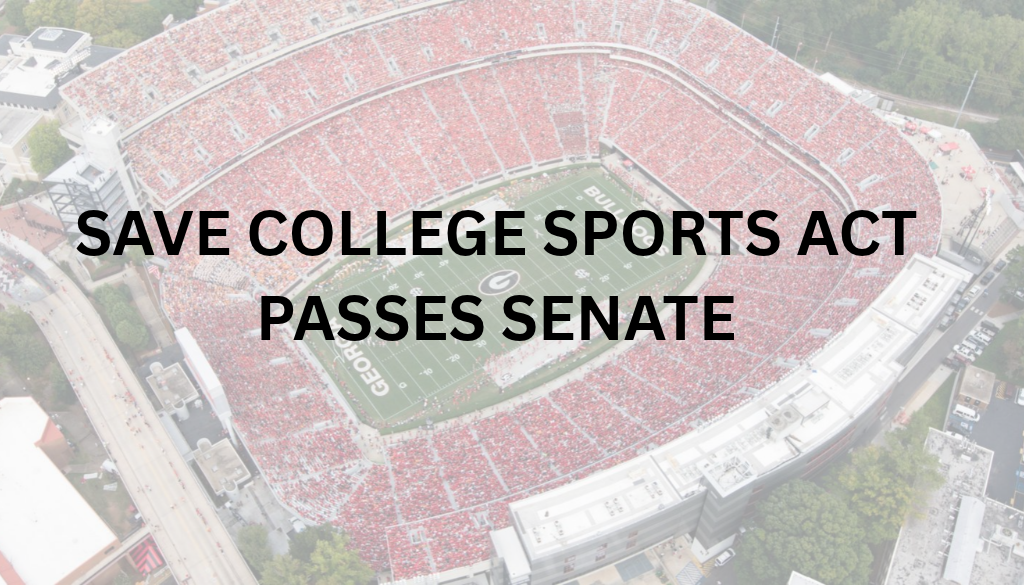
Now, Congress is considering stepping in with a national set of rules. The U.S. Senate voted 77-22 Monday, Sept. 28, to pass the bipartisan Protect College Sports Act of 2026, legislation that could bring some of the biggest changes yet to college athletics.
The bill was developed by Republican Sen. Ted Cruz of Texas and Democratic Sen. Maria Cantwell of Washington, along with other lawmakers from both parties. But there is an important distinction: the bill is not law yet. It must still pass the U.S. House of Representatives before it can be sent to the president.
So what would it actually do? For the average college football fan, some of the most noticeable changes would involve NIL money, revenue sharing, the transfer portal and eligibility. NIL would become a federally protected right. College athletes would have a federal right to earn money from their name, image and likeness — commonly known as NIL.
Instead of states operating under different laws and rules, the legislation would establish national standards. Athletes could continue signing legitimate endorsement and sponsorship agreements, but NIL deals above $600 would generally have to be disclosed. The legislation also attempts to distinguish legitimate NIL endorsements from payments being used primarily as recruiting incentives.
The legislation would preserve the system allowing colleges to share athletic revenue directly with their athletes. That means the era of college athletes receiving direct compensation from their schools would continue. The bill would establish federal rules surrounding that compensation rather than leaving much of the system to court settlements, state laws and NCAA regulations.
This may be one of the provisions college football fans notice most. The bill would establish a one-time transfer rule, allowing an athlete to transfer once and remain immediately eligible, with certain exceptions available for additional transfers. That would be a significant change from the near-free movement that has characterized the transfer portal in recent years.
The legislation also seeks to address tampering and recruiting athletes who are already enrolled at another school. In simple terms, Congress is attempting to bring more structure back to player movement.
The bill would generally give athletes a maximum of five calendar years of eligibility, although exceptions could apply in certain circumstances. That would create a more standardized national eligibility system.
The legislation includes protections that extend beyond NIL and football. Schools generally could not take away an athlete’s scholarship simply because the athlete becomes injured or is no longer performing at the level expected athletically. The bill also includes long-term educational protections designed to give athletes opportunities to complete their degrees.
Division I schools would have additional responsibilities for athletes’ medical care. Under the legislation, certain medical expenses related to college athletics would be covered for up to five years after an athlete’s eligibility ends. That could be particularly significant for athletes who leave college dealing with injuries suffered while competing.
Agents could also see new rules. The legislation would also regulate people representing college athletes. Agent fees would generally be capped at 5 percent, an effort supporters say would help protect young athletes entering increasingly complicated NIL and compensation agreements.
Another major piece of the legislation has to do with women’s sports and smaller college sports. As more athletic department money goes toward football, basketball and athlete compensation, there has been concern that schools could respond by eliminating sports that do not generate significant revenue. The Protect College Sports Act contains requirements intended to preserve opportunities in women’s sports and Olympic sports, including minimum requirements for Division I athletic programs. That could affect sports ranging from softball and volleyball to swimming, track and field, wrestling and gymnastics.
What about the NCAA? This is where the legislation becomes more controversial. The bill would give the NCAA and athletic conferences limited protection from certain antitrust lawsuits when enforcing national rules involving issues such as eligibility, transfers, recruiting and athlete compensation.
Supporters argue some legal protection is necessary because college athletics cannot operate under a stable national system if virtually every NCAA rule is vulnerable to another lawsuit. Critics argue that granting the NCAA additional legal protection could give the organization too much power and potentially limit athletes’ ability to challenge rules affecting their compensation and opportunities.
The legislation also does not fully settle the continuing debate over whether college athletes should eventually be considered employees with collective-bargaining rights.
Why is Congress getting involved? College athletics have undergone extraordinary change in a relatively short period. NIL agreements, direct revenue sharing, conference realignment, lawsuits and the transfer portal have transformed a system that operated very differently just a decade ago.
Supporters of the Protect College Sports Act say a single national framework is needed instead of a patchwork of state laws, court decisions and changing NCAA regulations. Opponents have raised concerns about how much authority would be returned to the NCAA and whether the legislation provides athletes enough power over their own careers and compensation.
The Senate vote showed substantial bipartisan support: 50 Republicans and 27 Democrats voted for final passage.
So, what happens next? For now, nothing changes for college athletes or fans. The Protect College Sports Act has passed the Senate, but it has not become federal law. The legislation now moves to the House of Representatives. If the House passes the same legislation, it could then be sent to the President. If the House changes the bill, lawmakers would have to resolve the differences between the two versions.
The House is currently away from Washington and is not expected to consider the legislation until after the November elections. Still, Monday’s Senate vote represents one of Congress’ most significant moves yet into the rapidly changing world of college athletics.
And if the legislation ultimately becomes law, college football fans could see the effects everywhere — from how much players are paid to how often they can transfer and how schools build their rosters. For fans who have spent the past several seasons trying to keep up with NIL, revenue sharing and an ever-changing transfer portal, Washington may soon have a much bigger say in the rules of the game.
The Senate’s official page also has the current bill materials and section-by-section information: