










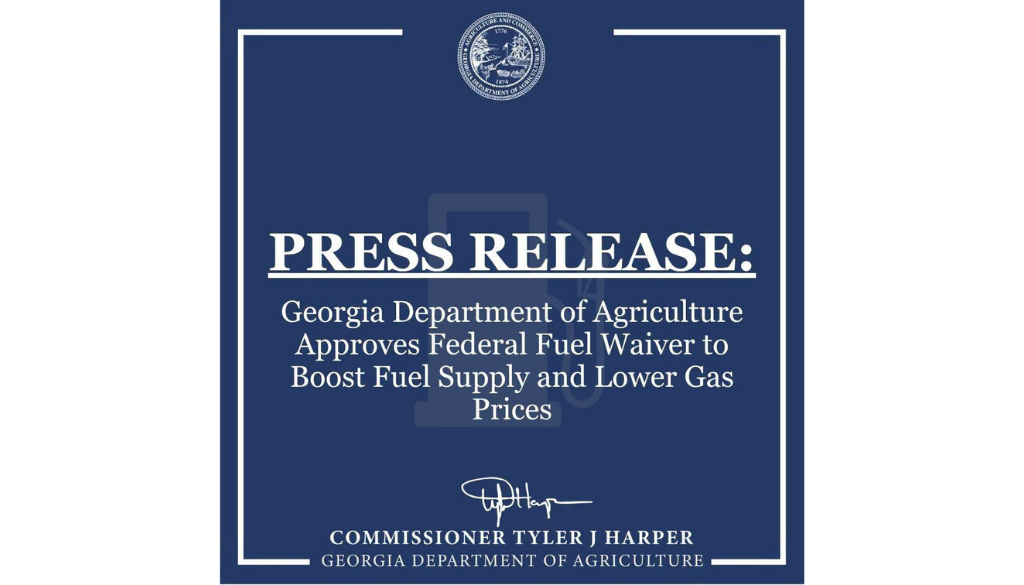
Georgia has adopted a temporary federal fuel waiver aimed at increasing gasoline supply, reducing the risk of distribution disruptions and easing pressure on prices at the pump. Georgia Agriculture Commissioner Tyler J Harper announced Thursday that the Georgia Department of Agriculture has adopted the U.S. Environmental Protection Agency’s national fuel waiver issued Aug. 20. The federal action was approved in response to what the EPA described as “extreme and unusual” fuel supply disruptions affecting refining capacity and energy distribution across the country.


“As high fuel prices persist, we’re taking action to give Georgians a break at the gas pump,” Harper said in the department’s announcement. “By adopting this federal waiver, we’re able to increase the available supply of fuel, while maintaining strict quality standards and certifying pumps across the state to ensure Georgians get what they pay for.”
The action temporarily relaxes certain seasonal gasoline requirements so more fuel can be moved into the marketplace. For Aug. 29-31, Georgia will allow gasoline containing between 9% and 15% ethanol at a maximum Reid Vapor Pressure of 10 psi. Beginning Sept. 1, the state will also allow an early transition to winter-grade gasoline by waiving summer low-volatility requirements through Sept. 15.


The EPA says ending the summer-blend requirement early is expected to add hundreds of thousands of barrels of gasoline per day to the national supply. Federal officials say the additional supply is intended to help bring prices down. In practical terms, the waiver gives refiners, fuel suppliers and distributors more flexibility in what gasoline can be sold during the final weeks of the summer fuel season.
The waiver does not eliminate Georgia’s fuel-quality or consumer-protection requirements. The Georgia Department of Agriculture said all other applicable state and federal safety and quality rules remain in effect. Businesses selling E15 fuel must also continue following federal requirements related to engine compatibility and preventing consumers from putting the fuel into vehicles or equipment not approved for its use. The department’s Fuel & Measures Division will continue overseeing fuel standards and pump certification across Georgia.
The waiver is designed to increase available fuel supply and reduce supply bottlenecks, which can place downward pressure on prices. That does not mean every Georgia gas station will immediately lower its price by a specific amount. Retail gasoline prices are affected by numerous factors, including crude oil costs, refinery production, transportation and distribution expenses, regional supply and demand and individual retailers.
The Georgia Department of Agriculture itself does not set or regulate retail gasoline prices. The temporary waiver remains in effect through Sept. 15, 2026. For South Georgia residents who depend heavily on vehicles for work, school, farming and everyday travel, even modest changes in fuel prices can quickly affect household and business expenses. The state’s decision means Georgia is now taking advantage of the additional flexibility provided under the federal waiver in hopes that greater fuel availability will ultimately provide some relief at the pump.
Read the full Georgia Department of Agriculture press release
Read Georgia’s official fuel waiver notice


