



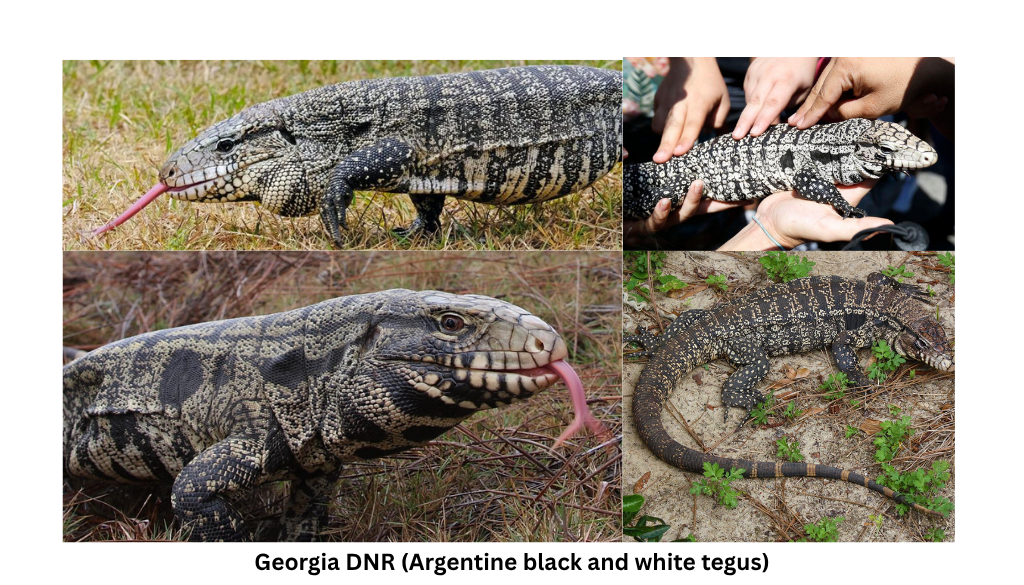
TOOMBS AND TATTNALL COUNTIES, Ga. — A large, invasive lizard native to South America continues to draw attention from Georgia wildlife officials as they work to control an established wild population in two Southeast Georgia counties.

The Georgia Department of Natural Resources (DNR) is asking residents in Toombs, Tattnall and neighboring counties to remain alert for Argentine black and white tegus, a species that can grow up to four feet long and weigh more than 10 pounds.
Although these reptiles may resemble oversized lizards commonly found in Georgia, wildlife officials say their presence poses a serious concern for native animals.

Argentine black and white tegus are opportunistic feeders, consuming a wide variety of plants and animals. Their diet includes eggs from ground-nesting birds such as wild turkeys and quail, along with eggs and young from other reptiles, including protected gopher tortoises and American alligators. Tegus also eat insects, small animals, fruits, vegetables, chicken eggs and pet food.
According to DNR, there are additional concerns that the reptiles could spread exotic parasites to native wildlife or contribute to bacterial contamination of crops. Like many reptiles, tegus can carry Salmonella bacteria.
Georgia wildlife officials began investigating reports of tegus in eastern Toombs and western Tattnall counties in 2018. The animals are believed to have originated from escaped or intentionally released captive reptiles, although their exact origin has not been established.
In November 2025, DNR reported 11 confirmed tegu sightings in the two counties that year, the highest annual total since monitoring began. Wildlife biologists cautioned that the increase could reflect more animals, improved reporting or a combination of both.
The agency continued urging residents to report sightings during 2026, including in an April advisory directed at Toombs, Tattnall and surrounding counties.
While individual tegus have been reported elsewhere in Georgia, DNR identifies the Toombs–Tattnall area as the state’s only known established wild population.
Argentine black and white tegus have dark gray or black bodies marked with white bands or spots along their backs and tails. They have muscular bodies, strong legs, sharp claws and long tails. Although adults can reach four feet in length, smaller tegus may be mistaken for native reptiles. DNR encourages residents to photograph suspected tegus when possible to help biologists identify them correctly.
According to DNR, tegus are not generally considered aggressive toward people, but they may defend themselves if threatened. The agency also does not consider them a significant threat to household dogs or cats. However, residents should avoid attempting to handle unfamiliar wildlife.
Georgia DNR recommends that residents report any suspected tegu sightings, whether the animal is alive or dead. Reports should include the location and a photograph, if one can be obtained safely.
Residents can report sightings through:
Phone: 478-994-1438
Email: gainvasives@dnr.ga.gov
Online: https://www.gainvasives.org/argentine-black-and-white-tegu/
The agency also recommends keeping pet food indoors, removing brush piles and debris that provide shelter, and filling holes that could serve as hiding places.
Tegus are classified as non-native wildlife and may legally be trapped or humanely killed on private property with landowner permission, subject to local ordinances and applicable safety requirements. DNR can also assist with trapping at confirmed locations in the affected area.
Although the established wild population remains centered in Toombs and Tattnall counties, wildlife officials are encouraging residents throughout neighboring communities to recognize and report these reptiles.
Early detection is important because the species can survive cooler temperatures and could potentially establish populations elsewhere.
For residents of Jeff Davis County and surrounding areas, knowing what a tegu looks like and how to report one can help wildlife officials monitor its movement and protect native species.
For photographs, identification guidance and additional information, visit the Georgia Department of Natural Resources:
