



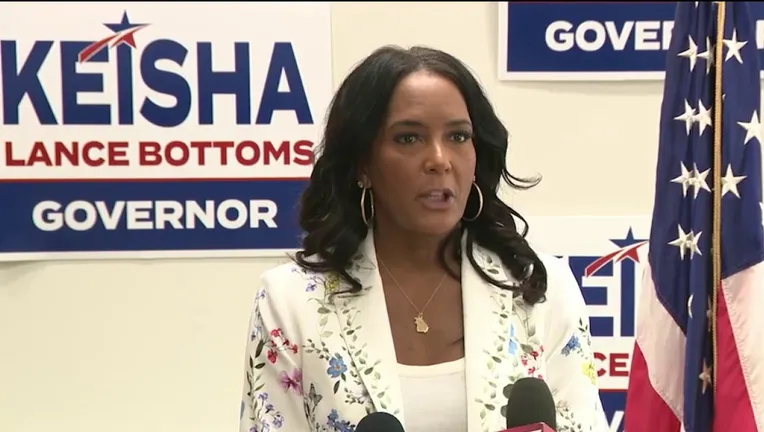
Former Atlanta mayor defeats Republican Rick Jackson in November 3 general election.

ATLANTA, Ga. — Democrat Keisha Lance Bottoms has been elected Georgia’s next governor, defeating Republican businessman Rick Jackson in the November 3, 2026, general election. The Associated Press called the race for Bottoms at approximately 9:24 p.m. Tuesday. The election results remain unofficial until certified by state election officials.
Bottoms’ election marks several historic firsts. She will become Georgia’s first female governor, the state’s first Black governor, and the first Black woman elected governor of any U.S. state.

Her victory also returns the Georgia governor’s office to Democratic control for the first time in more than two decades. Republicans have held the office since Sonny Perdue took office in January 2003.
Bottoms, 56, previously served as mayor of Atlanta from 2018 to 2022. Before becoming mayor, she served on the Atlanta City Council. Following her time as mayor, Bottoms worked in the administration of President Joe Biden, serving as director of the White House Office of Public Engagement and as a senior adviser.
During her gubernatorial campaign, Bottoms emphasized expanding access to healthcare, addressing housing affordability, supporting public education, and reducing household expenses. Her proposals included expanding Medicaid eligibility, increasing the state minimum wage, and providing additional financial relief to Georgia families.
Jackson, a healthcare industry executive and founder of Jackson Healthcare, entered the race as a first-time candidate for public office.
His campaign focused on reducing taxes, encouraging economic development, strengthening public safety, and limiting government regulation. Jackson proposed reducing Georgia’s state income tax over several years, with the long-term goal of eliminating it. He also advocated measures intended to provide property tax relief.
The candidates presented different approaches to several major issues, including taxation, healthcare policy, abortion laws, and the role of state government.
Bottoms will succeed Republican Gov. Brian Kemp, who was constitutionally prohibited from seeking a third consecutive term after serving two terms as governor.
The incoming administration will be responsible for developing budget proposals, overseeing executive agencies, and working with the Georgia General Assembly on legislation affecting communities throughout the state.
Among the issues facing the next administration are education funding, transportation, healthcare access, economic development, and state and local taxation.
Although the governor has significant executive authority, many policy proposals require legislative approval before becoming law.
Georgia election officials will complete the canvassing and certification process before the results become official.
Following certification, preparations will continue for the transfer of executive authority when the new gubernatorial term begins in January 2027.
Bottoms’ election represents a change in party leadership at the governor’s office, while the policies and legislative priorities of her administration will become clearer during the transition and the upcoming legislative session.
