



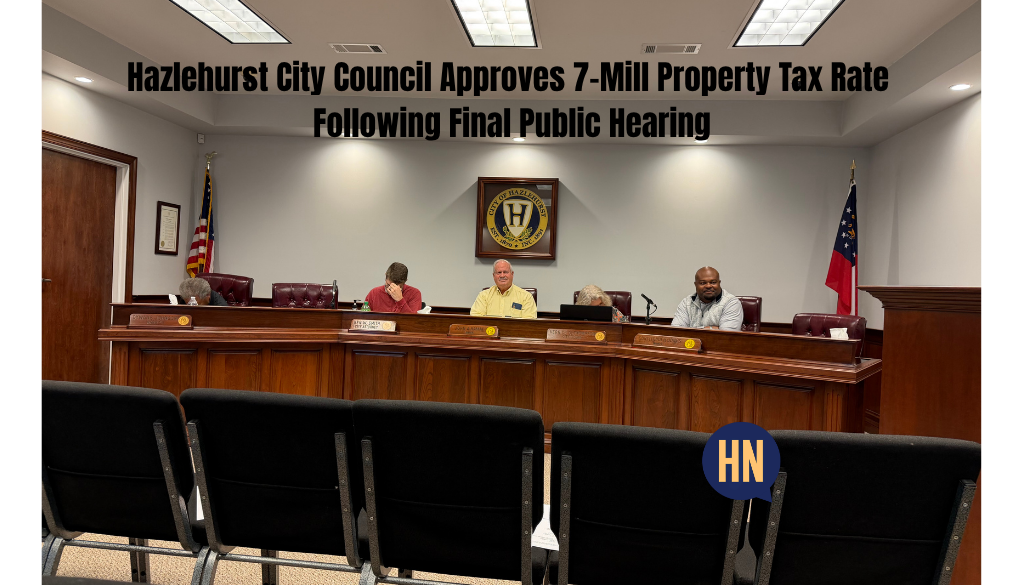
The final public hearing began at 4:30 p.m., followed by a called council meeting at 5:30 p.m. to consider adoption of the rate. Three citizens attended the public hearing, where discussion centered on the city’s budget projections, the timing of property tax collections, and the potential effects of delaying the decision.

During the hearing, a citizen questioned the difference between two figures appearing in city financial documents. He referenced a budgeted real property tax revenue amount of $665,894 and a projected tax levy of approximately $981,005 included in the city’s legal advertisements.
The citizen asked officials to explain the difference between the amounts and questioned whether the city’s budget accurately reflected anticipated property tax revenue. Councilman Chris Jones responded that the figures involved different accounting and collection periods. He explained that the city’s fiscal year begins July 1, while property tax billing and collections follow a different schedule.

Jones said the city must prepare budget estimates before final tax information becomes available, creating differences between projected and actual collections. The citizen continued to question the explanation and expressed concern about the city’s budgeting process. The discussion did not result in a revision to the figures during the hearing.
Council members also discussed the timing of the millage rate adoption and its potential relationship to property tax relief provided through state programs. Jones expressed concern that further delays or changes to previously submitted tax information could complicate the process and potentially affect the timing of tax relief.
He referenced anticipated property tax credits for eligible homeowners and emphasized the importance of completing the required procedures. Other officials similarly expressed concern that additional delays could affect tax billing and the city’s receipt of property tax revenue.
The hearing also included discussion about the city’s earlier decision to reduce its millage rate. Officials explained that the rate had previously been eight mills before being reduced to six mills to provide relief following Hurricane Helene storm-related hardships.
Council members said the reduction was intended to help residents during a difficult period and discussed the possibility of adjusting the rate again as financial circumstances changed. One citizen encouraged the city to provide a public explanation of the proposed increase, saying residents would benefit from understanding the history of the reduction and the reasons for restoring one mill.
City officials expressed willingness to provide additional information to help residents understand the decision.
Following the public hearing, the council convened its 5:30 p.m. called meeting to consider final adoption of the property tax rate. A motion was made and seconded to approve the millage rate.
There was no additional discussion before the vote. The motion passed unanimously, with three votes in favor and none opposed.
The city’s adopted property tax rate is now seven mills, compared with six mills the previous year.
A mill represents $1 in property tax for every $1,000 of taxable assessed property value. For example, a one-mill increase would add $40 annually to the city portion of the property tax on a property with a taxable assessed value of $40,000, assuming that value and applicable exemptions remain unchanged.
The actual effect on an individual property owner’s bill will depend on the property’s taxable value, applicable exemptions, and other taxing authorities’ rates.
The seven-mill rate applies to the city’s portion of the property tax bill and does not represent the combined millage rate for all taxing authorities.
With the council’s final approval, the city has completed its vote on the proposed increase. Residents can expect the adopted rate to be reflected in the city portion of their property tax bills, subject to the applicable assessments, exemptions, and tax relief provisions.
The discussion at Thursday’s public hearing underscored the complexity of property tax calculations and the importance of clear communication about how budget projections, tax collections, and state relief programs affect taxpayers.
