



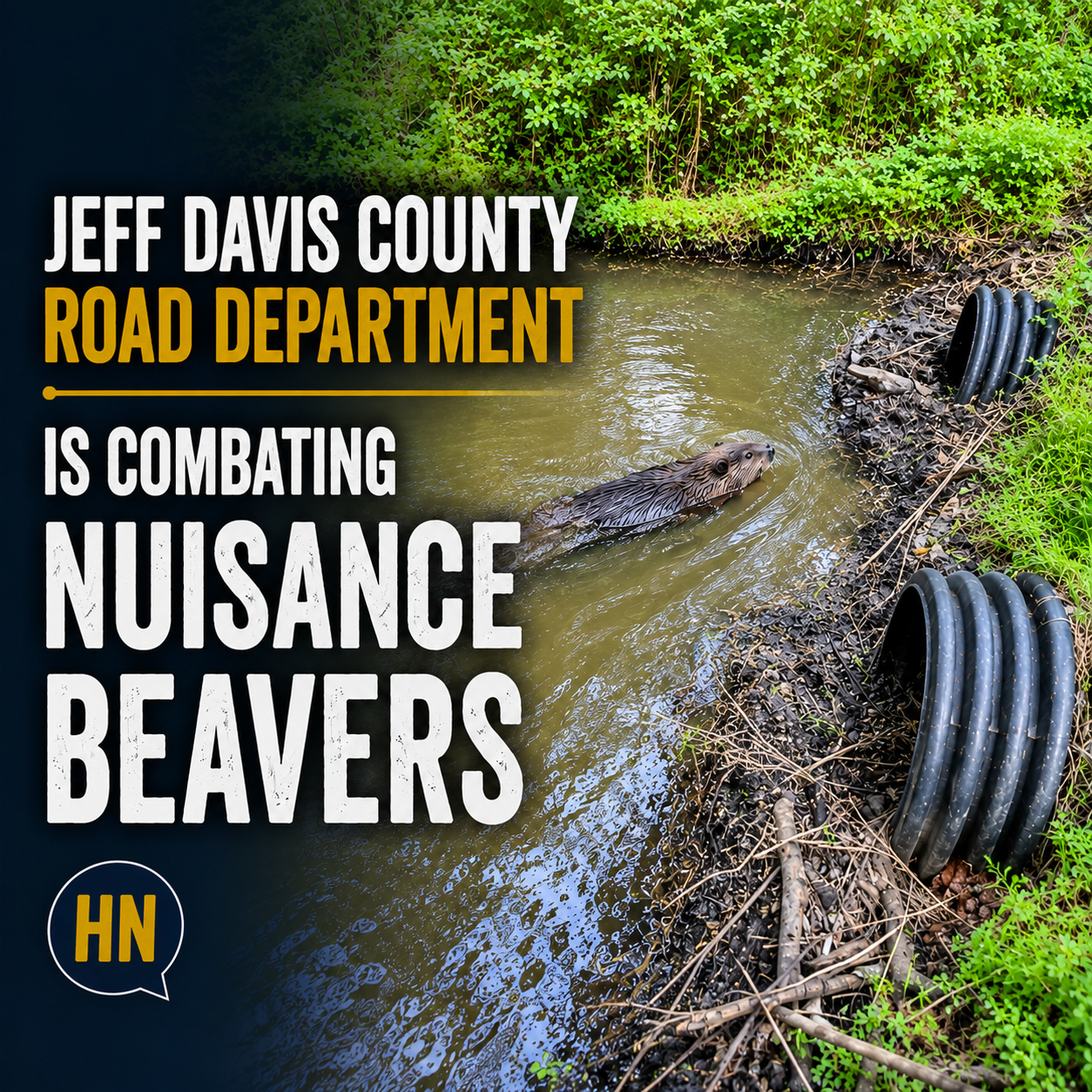
A long-standing problem that has caused flooded roads, damaged drainage pipes, and costly repairs throughout Jeff Davis County is beginning to improve thanks to a targeted beaver removal program approved by the Jeff Davis County Board of Commissioners. During the July meeting of the Jeff Davis County Commissioners, commissioners approved hiring Georgia Beaver Reapers to help reduce the county’s growing beaver population and address the damage the animals have been causing to the county’s road drainage system.

For years, beavers have created ongoing challenges for the Jeff Davis County Road Department. According to county officials, beavers frequently build dams and tightly pack drainage pipes with sticks, mud, and other debris. They also construct large debris piles at both the entrance and exit of culverts, preventing water from flowing properly. When pipes become clogged, water backs up onto county roads, creating hazardous driving conditions. In some cases, beaver dams have burst, flooding roadways and causing additional damage.
The Road Department has also spent considerable time and money replacing drainage pipes that become damaged while crews attempt to remove the tightly packed debris. Those repeated repairs not only increase costs for taxpayers but also require countless man-hours that could otherwise be spent maintaining other county roads.

Just weeks after beginning work in Jeff Davis County, the program is already showing promising results. According to Ricky Wade of Georgia Beaver Reapers, crews spent six days working throughout the county during their initial visit.
During that time, they:
- Removed 33 beavers
- Worked at 21 locations across Jeff Davis County
The company specializes in professional beaver management, evaluating each location to identify beaver activity and using targeted trapping methods to completely remove problem populations. Georgia Beaver Reapers is currently working with eight other counties in Georgia as well as Jeff Davis County.
Road Department Superintendent Chris Horton says the difference has been noticeable. “There is still work to do,” Horton said, “but Georgia Beaver Reapers has helped tremendously with this problem.” Horton said Road Department crews are no longer making repeated trips to many of the same locations that once required constant attention because of beaver activity. That allows employees to focus more time on other road maintenance projects throughout the county. County Commissioner Ricky Crosby said commissioners are encouraged by what they’ve seen so far. “We are very happy with the progress that has been made,“ Crosby said.
While the initial work has significantly reduced the problem, the effort will continue. Georgia Beaver Reapers will return to Jeff Davis County once each quarter to monitor previously treated locations and remove any new beaver activity. If problems arise between scheduled visits, the company will respond as needed.
Although beavers are an important part of Georgia’s natural ecosystem, unmanaged populations can create costly infrastructure problems when they build dams and block drainage systems.
By reducing beaver activity in key drainage areas, the county expects to:
- Reduce flooding on county roads.
- Protect culverts and drainage pipes from damage.
- Lower repair and replacement costs.
- Improve roadway safety for motorists.
- Allow Road Department crews to focus on other county maintenance projects instead of repeatedly addressing the same problem areas.
While officials acknowledge there is still work ahead, the early results suggest the county’s investment is already paying off. With 33 beavers removed from 21 locations in just six days, the program has begun addressing a problem that has affected Jeff Davis County for years.
For county leaders, the goal is simple: protect county infrastructure, improve public safety, and reduce the long-term costs associated with beaver damage—one location at a time.
