



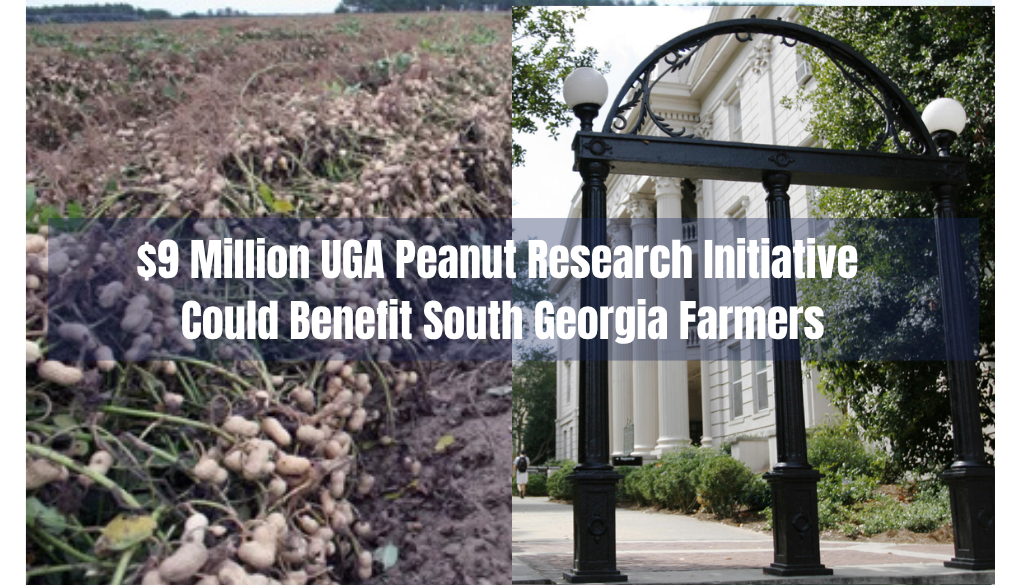
ATHENS, Ga. — Peanuts are more than just a crop in South Georgia. They are an important part of the region’s agricultural economy, supporting local farmers, businesses, and communities. Now, a new $9 million research initiative at the University of Georgia could help shape the future of peanut production, both internationally and here at home.

The University of Georgia has announced that it will lead a new international peanut research and innovation laboratory focused on improving peanut varieties, strengthening crop production, and addressing agricultural challenges that affect farmers around the world.
While much of the research will initially focus on developing countries, the discoveries could eventually provide valuable benefits to peanut growers throughout Georgia, including those in Jeff Davis County and surrounding areas.

Peanut farmers face numerous challenges each growing season, including unpredictable weather, drought, pests, crop diseases, and rising production costs. The new UGA-led research initiative will explore ways to develop peanut varieties that are more resilient to environmental stresses while improving agricultural productivity.
Researchers plan to use advanced genetic research, artificial intelligence, and other agricultural technologies to identify characteristics that could help peanut plants better withstand drought, diseases, and pests.
These areas of research are especially relevant to South Georgia, where peanut production depends heavily on favorable growing conditions and effective crop management. Developing stronger, more resilient peanut varieties could eventually help growers reduce crop losses, improve yields, and better manage some of the risks associated with farming.
According to the University of Georgia, the laboratory will receive an initial $9 million in funding through the U.S. Department of State. The initiative is expected to operate for up to five years, with research partnerships involving scientists and agricultural organizations in multiple countries.
A significant portion of the initial research and field testing will focus on peanut-growing regions in Africa, where farmers face challenges involving food security, limited agricultural resources, and environmental conditions.
The program will also provide research and training opportunities for more than 100 scientists and students. By bringing together researchers from different countries, UGA hopes to accelerate discoveries that can improve peanut production and strengthen agricultural systems.
Although the project is international in scope, its potential impact extends beyond the countries where initial research will take place. Georgia is one of the nation’s leading peanut-producing states, and the crop plays a significant role in the economy of South Georgia.
Farmers throughout Jeff Davis County and neighboring counties depend on agricultural research to help address problems that can affect both crop quality and profitability. Research involving disease resistance, drought tolerance, and improved peanut genetics could eventually contribute to better varieties and production practices for Georgia growers.
The international partnerships could also help researchers identify emerging pests and diseases before they become widespread threats to American peanut production.
In addition, advances in peanut production and quality could create opportunities for agricultural trade and market development. However, the funding is intended for research rather than direct payments to farmers, and any benefits to local growers would depend on the findings and their eventual application in agricultural production.
The University of Georgia has a longstanding connection to peanut research through its agricultural programs, scientists, and Cooperative Extension network. Research conducted through UGA helps farmers make decisions involving crop varieties, pest management, soil health, irrigation, and other aspects of agricultural production.
The new international laboratory will expand those efforts by connecting Georgia researchers with scientists working on similar agricultural challenges around the world.
For South Georgia farmers, the value of that work may ultimately be measured by how effectively new discoveries can be applied in the field.
Agriculture remains a cornerstone of the South Georgia economy, and peanuts continue to be among the crops that define the region’s farming heritage.
While the new research initiative will not immediately change how local farmers grow their crops, it represents another investment in the science and technology that could influence agriculture for years to come.
For peanut growers in Jeff Davis County and across South Georgia, advancements in crop resilience, disease prevention, and agricultural productivity could eventually offer new tools for navigating the challenges of modern farming.
The University of Georgia’s $9 million research initiative is international in reach, but its discoveries could one day have an impact much closer to home — in the peanut fields of South Georgia.
Source: University of Georgia News, October 15, 2026.
