








First public hearing outlines proposed safeguards as residents suggest additional changes
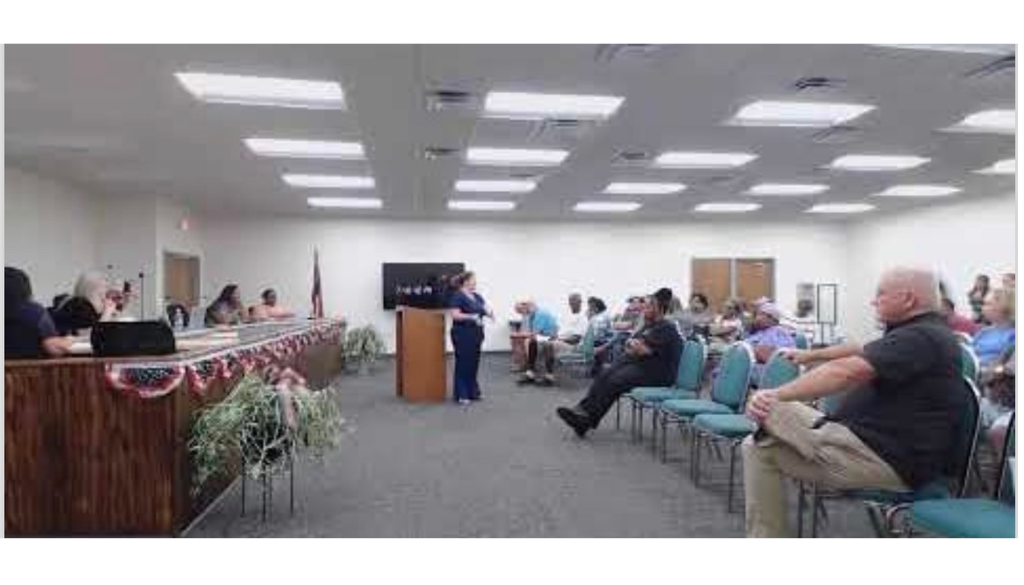
McRAE-HELENA, Ga. — As communities across Georgia consider how to address the rapid growth of data centers, neighboring Telfair County is moving toward putting regulations in place before a large-scale data center development arrives. Telfair County recently held the first public hearing on a proposed data center ordinance for the unincorporated areas of the county, giving residents an opportunity to hear an overview of the proposal and offer comments and suggested changes.


No vote was scheduled during the public hearing. County officials explained that additional readings would be required before the ordinance could be adopted.
The discussion is particularly relevant to Jeff Davis County, where data centers have also become part of the public conversation. Hazlehurst Now has been following how other Southeast Georgia communities are approaching the issue as local discussions continue.


Telfair Proposes Rules Before Development. Telfair County Commission Chairman Christy Oxford Purvis opened the hearing by explaining that the proposed ordinance is intended to establish guidelines for the safe and orderly development of data centers while balancing potential economic development with community and environmental protections.
Purvis noted that she was providing a summary of the proposed ordinance rather than reading the complete document verbatim. According to that summary, the proposal includes a number of requirements for any data center seeking to locate in unincorporated Telfair County.
Among them are a $15,000 application fee and a $50,000 professional review escrow deposit, along with a valid business license. Developers would also be required to hold three public meetings, with advance newspaper notification, signage at the proposed site and public disclosure of application documents.
Setbacks, Noise and Visual Protections
The proposal also addresses how close a data center could be located to surrounding property. According to the summary presented at the hearing, the draft calls for a 300-foot minimum setback from property lines and roads, additional separation requirements involving nearby structures, and a 100-foot undisturbed vegetative buffer. Exterior walls facing neighboring properties would be required to use muted colors, and equipment would have to be screened.
Noise is also addressed. Purvis said the proposed ordinance would limit continuous sound to 35 decibels when measured 25 feet from the property line. Testing of backup generators would be restricted to certain daytime hours, while exterior lighting would have to be shielded and subject to height and placement requirements.
Water, Environment and Power Addressed
Environmental protections are another significant portion of the proposal. Purvis said open-loop cooling would be prohibited, as would primary on-site power generation. The proposal would also require an independent environmental impact assessment and ongoing air, water and soil testing.
Developers would be required to submit a traffic plan and provide specialized training and equipment for local emergency responders. If a facility were eventually abandoned, the ordinance would also require the property to be decommissioned and restored.
The proposed ordinance also contains provisions concerning tax incentives. During the meeting, officials said the draft includes language stating that applicants and their successors would not seek certain tax abatements, exemptions, payments in lieu of taxes or other tax reductions from Telfair County or county-related authorities.
Residents Suggest Changes
While several speakers described the proposal as a good starting point, the hearing also produced numerous suggestions for strengthening or clarifying the ordinance.
Those suggestions included larger setbacks, specific limits on water consumption, stronger financial bonding requirements, tougher penalties for violations, additional hazardous-material reporting requirements and changes to some of the permitting and environmental-review language.
One resident spent considerable time reviewing the proposal section by section and encouraged commissioners to consider changes ranging from how cooling systems are defined to how road damage and eventual decommissioning would be funded.
Those recommendations were made during the public hearing and should not be confused with provisions already contained in the proposed ordinance.
Moratorium Becomes Part of Discussion
Residents and officials also discussed whether Telfair County should consider a temporary moratorium on data center development while regulations are finalized. County officials and the county’s legal representative discussed questions surrounding whether and how a moratorium could legally be implemented in Telfair County, which does not have general land-use zoning in its unincorporated areas.
Some residents favored a moratorium to provide additional time to revise the ordinance. Others encouraged commissioners to continue moving the existing proposal forward so the county would have regulations in place as soon as possible. County officials indicated they favored continuing the ordinance process while remaining open to future amendments.
Why Telfair County Is Acting Now
One of the most relevant exchanges of the evening came when a resident asked what had prompted Telfair County to begin addressing data centers when no specific project had been publicly identified during the hearing.
Purvis pointed to the growing number of data center discussions taking place in surrounding counties and across Georgia. She also said commissioners have heard repeatedly about the issue through meetings and training involving the Association County Commissioners of Georgia.
Her explanation was that counties need to prepare for the possibility of data center development — whether they ultimately want such development or not. Throughout the hearing, a recurring theme was the desire to establish regulations before the county is faced with a development application.
Officials acknowledged that the proposed ordinance may not be perfect and could require changes as technology evolves and additional information becomes available. At the same time, they expressed concern about remaining without any data-center-specific regulations while that process continues.
Purvis said the county intended to schedule the remaining readings relatively quickly. She explained that, under the process being followed, the ordinance could be adopted at the third meeting and later amended if commissioners determine changes are necessary.
A Conversation That Reaches Beyond Telfair County
What happens next in Telfair County will be worth watching for communities throughout the region.
The county’s first hearing demonstrated just how many issues can become part of the data center discussion — water, power, noise, neighboring property, roads, emergency response, environmental monitoring, taxes and what happens to a facility at the end of its useful life.
For Jeff Davis County residents, the Telfair discussion provides another example of how a nearby rural county is attempting to answer those questions before a large-scale project is at its doorstep.
Hazlehurst Now will continue following data center discussions both locally and in surrounding communities as counties across Southeast Georgia consider how — and under what conditions — this rapidly growing industry may become part of their future.


